

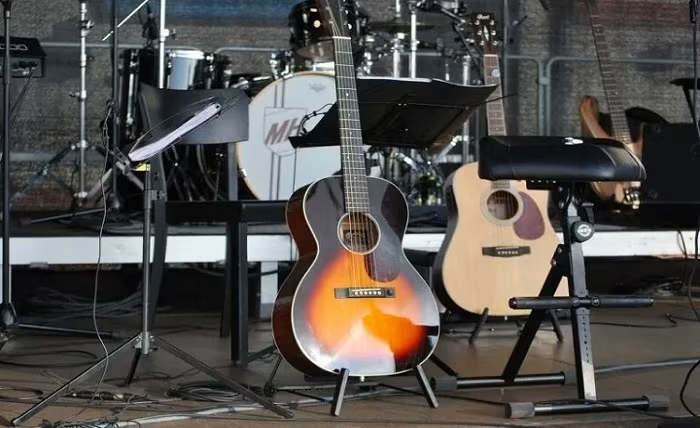
Musical instruments aren’t a common sight in homes or apartments. However, those who play an instrument for a living or as a cherished hobby won’t want to part with it, even when moving.
Even for a short, local move, it’s important to consider the unique characteristics of musical instruments. Many instruments are sensitive to vibrations, temperature changes, humidity fluctuations, and physical impact. Pianos, guitars, violins, drums, and electronic keyboards, for example, often have delicate structural components that can be damaged during relatively short moves. In many cases, hiring professional movers https://paramountmoving.ca/vancouver/service-locations/local-moving-chilliwack-movers/ is advisable.
String instruments
Ideally, instruments such as violins, cellos, and guitars should be transported in hard-shell cases with internal cushioning to limit movement during transit. Soft fabric covers provide minimal impact protection and are generally insufficient for long-distance or winter moves. You can further reduce vibration during transportation by adding extra padding around the instrument case.
Pianos
Pianos require especially careful handling due to their weight, internal mechanics, and sensitivity to movement. Upright and grand pianos often require professional movers who are experienced in piano transportation. Improper lifting or tilting may damage internal components, legs, pedals, or tuning mechanisms. Winter weather poses an additional risk because rapid temperature changes can affect wood expansion and string tension. Therefore, instruments should be protected from prolonged exposure to freezing conditions during loading and unloading.
Wood-based instruments
This group of instruments requires careful humidity control because it is highly sensitive to the dry indoor heating commonly found in Canada during the winter. Sudden environmental changes when moving between homes, storage areas, or vehicles can lead to cracking, warping, shrinking, or weakening of delicate glue joints and finishes in the wood. Therefore, humidity control packs, instrument humidifiers, and climate-stable storage conditions are often recommended, particularly for valuable acoustic instruments containing natural wood components and handcrafted structural elements.
Electronic instruments
Keyboards, amplifiers, studio monitors, and recording equipment should be carefully disconnected, with cables labeled and packed separately. Anti-static wrapping and shock-resistant boxes help protect electronic components during transport. Moisture exposure should be avoided entirely.
Additional considerations may arise when moving from a house to an apartment in Canada because apartment buildings present access, storage, and noise challenges:
- Access points. Large instruments, such as pianos, drum sets, harps, and electric organs, can be challenging to maneuver through apartment elevators, stairwells, narrow hallways, and entryways without causing damage to the instrument or the building interior. Before moving, it is essential to carefully measure entrances, hallways, ceiling clearances, and elevator dimensions to determine if partial disassembly, protective padding, lifting straps, or specialized moving equipment is necessary for safe transportation.
- Noise considerations. Instruments that could be used freely in a detached house may cause disturbances in shared residential buildings. Acoustic drums, amplified guitars, and pianos can transmit sound through walls and floors, which can lead to complaints from neighbors or building management. Many apartment residents therefore use soundproofing materials, electronic instruments with headphones, or limited practice schedules to avoid conflicts.
- Storage space. Large instrument cases, amplifiers, music stands, and recording accessories require organized storage solutions in smaller living spaces, where free floor space is often limited. Improper storage can increase the risk of accidental damage from daily household activity. It is also important to carefully monitor climate conditions near windows, heaters, air conditioners, and poorly insulated walls because temperature fluctuations and dry indoor air can affect the stability of wood, the tension of strings, electronic components, and the overall condition of instruments over time, especially during the winter heating season in Canada.