

Good morning is “Buenos días” in Spanish.
It is among the easy words to learn in Spanish.
It is used for greeting in the morning or the morning portion of the day.
Examples:
- ¡Buenos días! (Good morning!)
Everybody everywhere says it, home, school, work, or in the street.
Pronunciation
It is BWEH-nos DEE-ahs.
Breakdown:
- Bue → bweh
- Nos → nos
- Dí → dee
- As → ahs
Say slowly: BWEH-nos DEE-ahs.
The “u” in buenos is lost. It is substituted by “e”. It’s a simple word to pronounce.
When to Use Buenos Días
It is used until about noon in the morning.
In the afternoon use buenas tardes (good afternoon). In the evening or after night use buenas noches. It means good evening or good night.
Formal and Informal Usage
Buenos días is formal and informal.
Try your best to remember that it’s formal and friendly and can be used with anyone.
Formal usage:
- Buenos días, señor Gómez. (Good morning, Mr. Gómez.)
- Buenos días, doctora. (Good morning, doctor.)
- Buenos días, muecas. (Good morning, teacher.)
Informal usage:
- Buenos días, mamá. (Good morning, Mom.)
- Buenos días, amigos. (Good morning, friends.)
- Buenos días, Juan. (Good morning, Juan.)
And if you know the person, buen día and good day are acceptable.
It is informal and short and you can actually just use it if you happen to be in Argentina or Uruguay.
Examples:
- Buen día, Ana. (Good day, Ana.)
Goodbye after Buenos Días
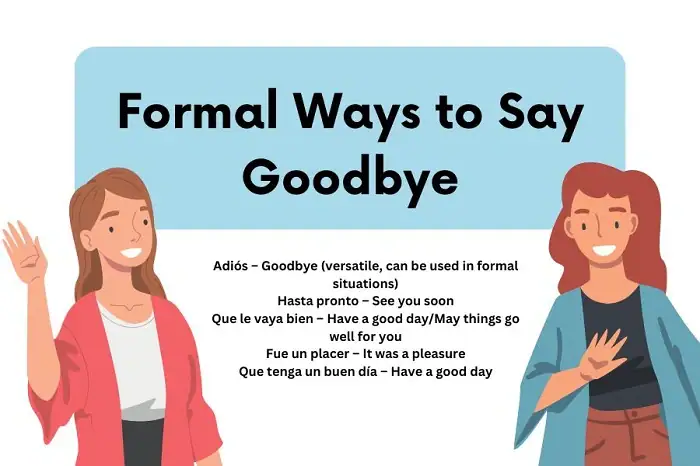
If the return is in terms of buenos días, ‘like’ type farewells on hearing buenos días type of return are employed.
Formal returns:
- Buenos días. (Good morning.)
- Muy buenos días. (A very good morning.)
- Igualmente. (The same to you.)
Greetings are very important. They provide courteous greetings using buenos días and that is respectful and polite.
They greet each other with smiles and by maintaining their gaze on each other.
We can use buenos días when people make formal greetings at the shopping center or work area before anything else.
They kiss hands or greet each other depending on how accustomed they are to the other.
Two cheek pecks are common when saying good morning to friends or family.
Examples:
- Buenos días, cómo amaneció? (Good morning, how did you wake up?)
- Buenos días, bienvenido. (Good morning, welcome.)
Also Read: Hello in Spanish: Definition, Pronunciation, and Usage
Fun Facts About Buenos Días
- It does technically say “good mornings,” but just for business done once in the morning.
- It was created because we needed to be able to say not only good day, but good mornings as well.
- You would say buen día in Argentina and Chile and would not use buenos días.
- They use buenos días with a smile in Mexico as a greeting in the morning for strangers.
Buenos días is a casual and polite Spanish greeting where you can greet good morning in good and respectful manners.
You can use it at home, school, office, or any other location where you will be greeting someone.
Hello and exchanging the good morning spirit is worthwhile.
And already in morning light is, receive it and welcome smiling: ¡Buenos días!