

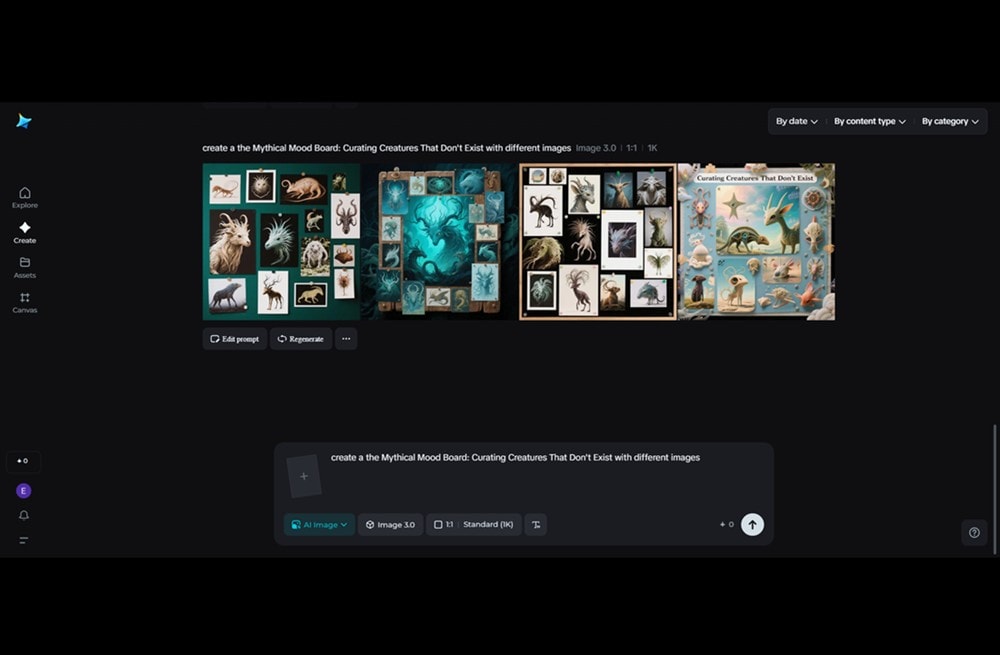
What if your next brand, short story, or side project didn’t need a real mascot — just a believable, beautifully designed imaginary creature? Mood boards are great at gathering color, texture, and attitude; a mythical mood board goes further: it assembles the essence of beings who would never pass a biology exam but who feel utterly real in a single glance. If you like playing with the in-between of worldbuilding and branding, Dreamina is a brilliant lab for this — try an AI photo generator to conjure photo-real textures, fur studies, or impossible eyes as raw ingredients for your creature collage.
This is less about drawing perfect beasts and more about curating consistent identities: voice, scale, habitat, wardrobe, and temperament. Below are playful strategies, practical prompts, and a three-step Dreamina workflow to help you build creatures that people want to adopt (and sticker, merch, or serialize).
Start with a personality, not a body
A creature’s silhouette is interesting — but its decisions are irresistible. Begin by answering a few tiny, human questions about your being:
-
What does it hoard? (Keys? Moonlight? Old mixtapes?)
-
How does it greet strangers? (Sings? Puffs glitter? Offers soup?)
-
What does it fear? (Silence? Broken clocks? Lost maps?)
These quirks seed tone and texture. Maybe your creature hates direct sunlight — that implies velvety skin and nocturnal accessories. Maybe it collects lost pens — now you have tiny pockets and an etiquette for giving them back.
Build micro-categories that feel lived-in
A good mood board divides the creature into parts. Create sections for: silhouette, texture, color story, accessories, habitat, and gestures. In each one, gather a few evocative images or swatches rather than a hundred random references.
-
Silhouette: 3-5 shapes that read at thumbnail size.
-
Texture: close-ups of fur, scales, woven cloth, cracked paint.
-
Color story: 4–6 swatches — primary, accent, and two mood neutrals.
-
Accessories: hats, pins, belts, or impossible objects the creature uses.
-
Habitat stills: corners of rooms, forests, or skylines that feel like home.
-
Gesture library: hands, tails, wings — the way it moves.
By keeping each category small and curated, your beast begins to inhabit a consistent visual language instead of borrowing style from a dozen unrelated contexts.
Props and rituals: give your creature habits
Habits animate a design. Think of three rituals your creature performs daily. These are gold for props and small assets on the board.
-
Stirring storms into teacups each morning.
-
Re-threading constellations on Tuesday evenings.
-
Whispering directions to lost travelers in the shape of steam.
Each ritual invites an object: a special spoon, a needle threaded with moonbeams, a pocket watch that points toward comfort. Include photos or sketches of these props so the creature’s life feels tangible.
Scale is a storytelling tool
Decide whether your creature is pocket-sized, human-scale, or mountain-sized. Scale affects how it wears accessories, what it shelters itself in, and how humans might interact with it. Mood boards benefit from scale anchors — a hand near the creature, a door it can sit in, a city skyline it obscures.
-
Pocket-sized -> wearable merch ideas, tiny habitats.
-
Human-scale -> costumes, AR filters, character actors.
-
Monumental -> environmental art, murals, large-format prints.
Pick one primary scale and one “conflict” scale (e.g., a small creature that occasionally becomes titan-sized) to create narrative tension.
How to make your creature brand-friendly (without losing weirdness)
If you plan to use your creature for storytelling or products, think about repeatable motifs that translate to logos, stamps, and icons. Keep these motifs simple: an ear shape, a constellation, a stitch pattern. They’ll be the visual shorthand for everything else.
When you need a quick emblem, an AI logo generator can propose compact crests that riff on your motifs — try literal versions (a feather + moon) and abstract (a swoop that suggests flight). Choose the one that reads at small sizes; your creature’s identity lives there.
Collage tricks: textures, cutouts, and negative space
Create movement by layering: place a velvety fur swatch over a hand-drawn silhouette, then add transparent overlays of ink splatters or leaf veins. Use negative space as a pose indicator — the absence of detail can suggest where the creature looks next.
-
Clip photographic textures into silhouette masks.
-
Use torn-paper edges for habitats to imply age.
-
Repeat a tiny icon across the board to create rhythm (like a signature footprint).
These tactile choices make the mood board feel like an artifact rather than a mood spreadsheet.
Three steps to conjure creature visuals with Dreamina
Want to turn those notes into strong imagery fast? Dreamina’s flow helps you move from idea to usable assets. Here’s how:
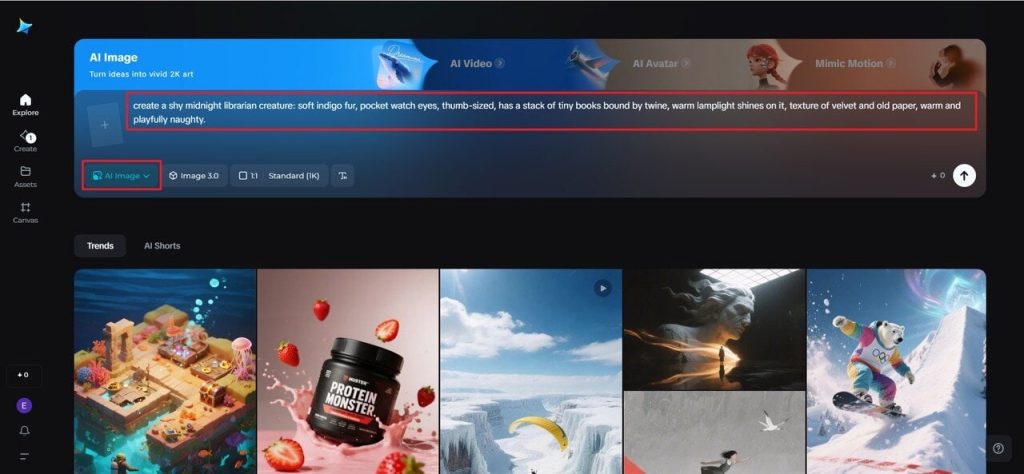
Step 1: Create a text prompt
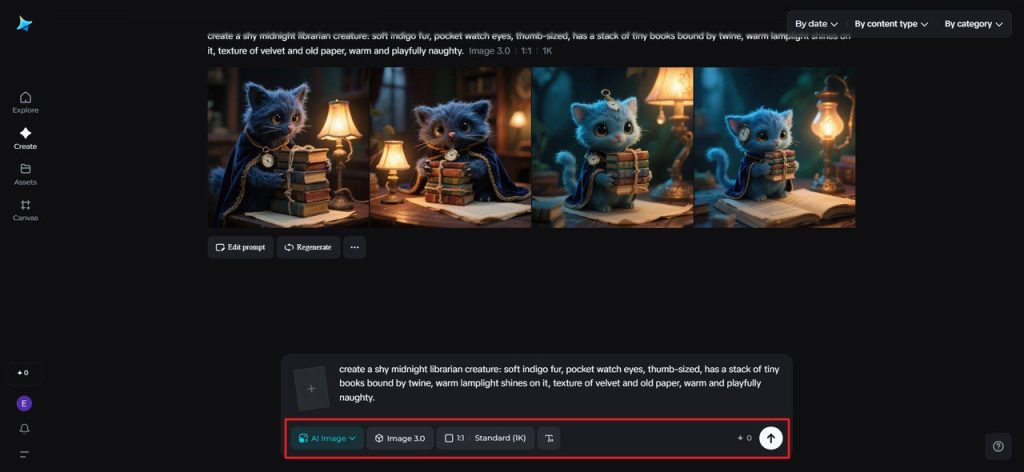
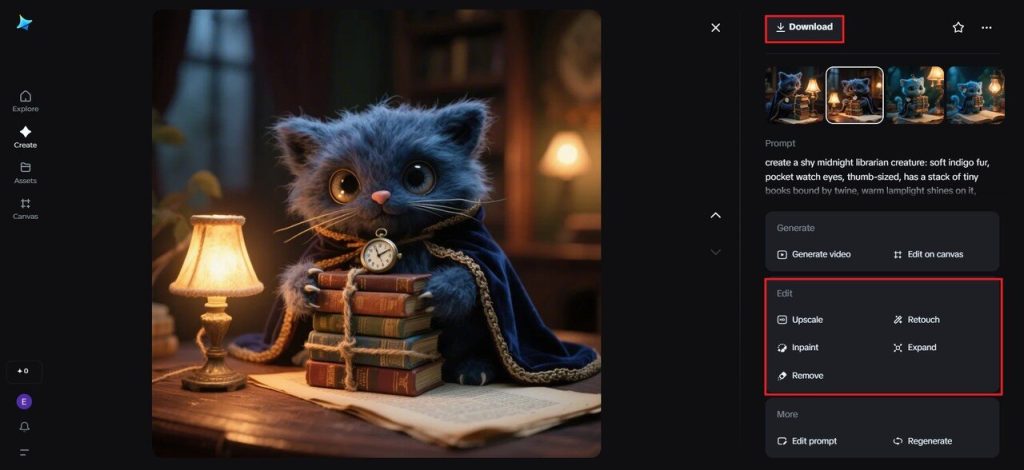
Go to Dreamina and enter a detailed text prompt about your creature’s nature, physical characteristics, and emotional tone. A clear prompt provides the generator with effective hints and tangible visual references. As an example: A shy midnight librarian creature: soft indigo fur, pocket watch eyes, thumb-sized, has a stack of tiny books bound by twine, warm lamplight shines on it, texture of velvet and old paper, warm and playfully naughty.“
Step 2: Set parameters and generate
Select a model that prioritizes detail or painterly texture, select an aspect ratio appropriate for your board (square for icons, vertical for character sheets), the size, and between 1k for faster drafts or 2k for high-quality assets. Finally, click Dreamina’s icon to create several variations you can sort through.
Step 3: Personalize and download
You can do more edits if you want to elevate your generated image. Refine paws or eyes using Dreamina’s inpaint feature, expand to expose more of the environment, remove artifacts, and retouch color to suit your palette. Once the image fits your mood, select the Download icon to save high-res files ready to be added to your mood board or export as stickers, prints, or reference sheets.
Companions, conflicts, and merch ideas
Once you have a creature, imagine its friends and rivals. Sidekicks create dynamics; rivals generate drama. Additionally, come up with basic merchandise that pays homage to the creature’s customs, such as enamel pins in the shape of its loafing cap, bookmark sets bearing its library crest, or a little blanket embroidered with its preferred stitch.
-
A humming moth that can read footnotes might make a companion.
-
A bureaucratic insect that demands forms for dreaming is the rival concept.
-
One such piece of product would be pocket nightlights shaped like the creature’s eye.
Fun limitations that foster creativity
Consider guidelines such as “no more than three colours,” “no face that looks like a human,” or “must include one texture from the real world.” You’ll come up with more creative ways to suggest fur, scales, or glass if you’re limited to using just two materials.
Share, iterate, and anthropologize
Present your mood board to friends as a field study: what do they assume about the creature’s diet, marriage rituals, or favorite music? Their answers will surprise you and add cultural depth. Keep the board editable — creatures evolve.
If you want to generate pattern variants, background scenes, or sticker-ready icons, a free AI art generator can quickly produce stylistic companions to populate the board without derailing your core aesthetic.
Closing the sketchbook (for now)
Designing mythical creatures is less about perfect anatomy and more about credible living. With Dreamina as a co-conspirator, you can iterate wildly: conjure texture passes, logo ideas, or sticker concepts until the being feels inevitable. Build small: a silhouette, a ritual, a prop — and the rest of the creature will follow like tides to the moon.
Create one creature this week. Give it a pocket, a fear, and a favorite snack. Name it quietly, then show it the world. Dreamina will help you make that world look like it’s always been there — waiting.