

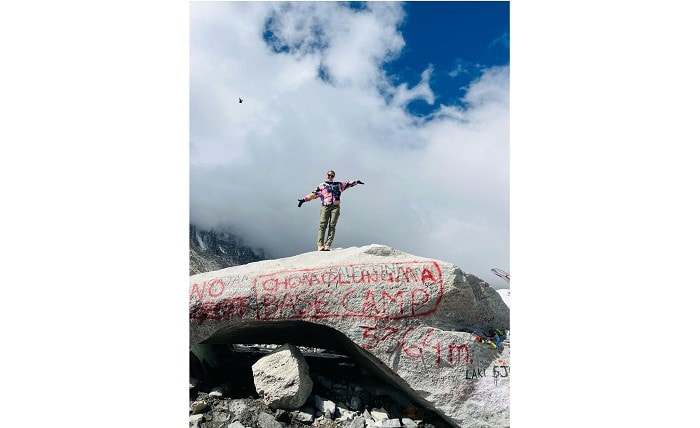
There are places in the world that whisper to you, and then there are places that roar. The Everest Base Camp trek is one of those thunderous calls — a journey that demands not just curiosity, but commitment. It’s a path carved by centuries of Sherpa footsteps, by the ice and wind that shape the Khumbu, and by the dreams of trekkers who long to stand in the shadow of the world’s tallest peak.
Everest, or Chomolungma — “Mother Goddess of the World” — needs no introduction. Yet the path that leads to her base is not just a trail; it’s a pilgrimage. It’s about walking through the heart of Nepal, where prayer flags flutter over suspension bridges, and where every breath at altitude feels both like a battle and a blessing.
This is not merely a trek. It’s a slow unspooling of your limits, a meditation in motion — and for many, a rediscovery of self at 5,364 meters above sea level.
The Journey Begins: Flying into the Khumbu
Every great adventure starts with a leap — and in the case of Everest Base Camp, it’s a leap of faith into the short, nerve-rattling runway of Lukla. Known as one of the world’s most thrilling airstrips, the 30-minute flight from Kathmandu to Lukla sets the tone: the mountains are majestic, but they demand respect.
Lukla, perched at 2,860 meters, is more than a gateway; it’s the first handshake with the Khumbu region. The air is thinner, cleaner, and tinged with incense from nearby monasteries. Yaks jingle past carrying supplies, trekkers shuffle through teahouse doors for their first cup of lemon ginger tea, and the thrill of beginning fills the narrow streets.
From here, the trail unfurls like a ribbon through pine forests and across swinging bridges draped in prayer flags. Rivers born from glaciers roar below, and every bend opens to new vistas of snow-clad peaks.
The early days — from Lukla to Phakding, and then to Namche Bazaar — are the gentle introduction, though “gentle” is relative. The path undulates relentlessly, and every climb is a reminder: the Himalaya gives nothing for free.
Namche Bazaar: The Sherpa Capital of the World
Namche Bazaar (3,440 m) is more than a stopover; it’s the beating heart of the Khumbu. Shaped like an amphitheater carved into the mountainside, it’s where trekkers rest, acclimatize, and glimpse their first view of Everest if the weather smiles.
This vibrant town hums with energy — bakeries serving apple pie beside yak-wool shops, Wi-Fi cafés buzzing with trekkers sharing updates, and monasteries echoing with chants that have floated over these hills for generations.
Acclimatization here is vital. The mantra “climb high, sleep low” defines the rhythm. A popular acclimatization hike takes you to the Everest View Hotel, offering your first real panorama of the giants: Everest, Lhotse, Nuptse, and Ama Dablam, the most graceful of them all.
But Namche is not just a waypoint — it’s a lesson in Sherpa resilience and hospitality. These mountain people, famed for their strength and serenity, have balanced ancient Buddhist traditions with the demands of modern tourism. To share tea with a Sherpa elder is to sip from a deep well of humility.
The Trail of Temples and Thunder: Namche to Tengboche
Leaving Namche, the path winds through rhododendron forests that blaze pink and red in spring, with Himalayan monals darting between the trees. The air grows sharper as you approach Tengboche (3,867 m), home to the iconic Tengboche Monastery — the spiritual center of the Khumbu.
Few places on earth blend natural and spiritual grandeur like this. The monastery, framed by Everest, Lhotse, and Ama Dablam, feels suspended between heaven and earth. Monks in crimson robes chant prayers as incense curls into the mountain air, offering blessings not just to climbers but to all who pass.
If you’re lucky, you’ll arrive during evening puja — the rhythmic beating of drums, the low murmur of mantras, and the deep vibration of horns fill the hall. Even the most skeptical trekkers find themselves stilled, as if the Himalaya itself were breathing through those sacred walls.
Outside, as the sun dips, Ama Dablam glows golden — a goddess watching over all who dare to walk her valley.
Into the Thin Air: Dingboche, Lobuche, and the Climb Beyond Comfort
From Tengboche, the landscape shifts dramatically. The forests give way to scrub and stone, and every step upward feels like peeling away layers of the known world. The trail to Dingboche (4,410 m) winds through the village of Pangboche — home to ancient mani walls carved with Buddhist prayers — before opening into wide valleys swept by icy winds.
By the time you reach Dingboche, oxygen levels have dropped to roughly 60% of sea level. Even simple tasks — zipping a jacket, brushing teeth — feel like effort. Acclimatization becomes more than a guideline; it’s a survival tool. A second rest day here, with short hikes up Nangkartshang Hill, helps the body adapt.
The nights are colder, the stars sharper. You begin to notice your heartbeat echoing in your ears as you lie awake — a rhythmic reminder that your body is fighting, adapting, surviving.
From Dingboche to Lobuche (4,940 m), the trail climbs steadily through the windswept moraine of the Khumbu Glacier. En route lies the Thukla Pass, a place of quiet reverence where memorials honor climbers who never returned from Everest’s higher reaches. Among the fluttering flags and stone cairns, names like Scott Fischer and Rob Hall remind you that ambition and humility must walk hand in hand here.
By now, conversation among trekkers slows. Every breath is precious. The laughter of earlier days gives way to a shared silence — the unspoken understanding of what altitude does to mind and body.
The Final Push: Gorak Shep and Everest Base Camp
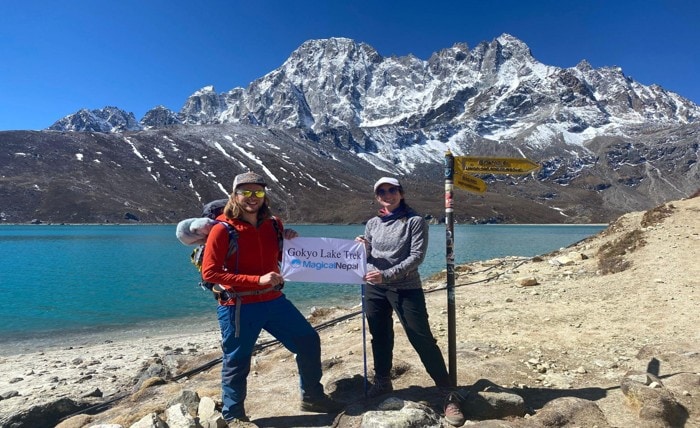
Gorak Shep (5,164 m) is the last settlement before Base Camp — a barren outpost on a frozen lakebed, surrounded by peaks that seem to pierce the stratosphere. The air is thin, the landscape alien, and excitement tinged with exhaustion hums through every lodge.
From here, the path to Everest Base Camp is both exhilarating and grueling — a slow, steady march along the edge of the Khumbu Glacier. The ground crunches beneath your boots, the wind howls, and ahead, the black pyramid of Everest looms behind the jagged wall of Nuptse.
After hours of steady effort, the prayer-flag-covered cairns of Base Camp come into view. There’s no single grand moment — no Everest summit, no sweeping view of the peak itself — but the emotion hits hard. This is where expeditions begin, where climbers steel themselves for their date with destiny.
Standing here, surrounded by icefalls and banners left by those who dared higher, you feel the weight of history. Every trekker — from the weekend adventurer to the lifetime mountaineer — knows they’ve arrived at something profound.
It’s not just about reaching Base Camp. It’s about what it took to get there — the patience, persistence, and humility demanded by every step.
Kala Patthar: Touching the Sky
For many, the true climax of the journey comes the next morning. Before dawn, trekkers climb Kala Patthar (5,545 m) — “Black Rock” — for the best possible view of Everest. It’s a steep, breath-stealing ascent in the icy dark, with headlamps bobbing like fireflies up the slope.
Then, as the first rays of sunlight hit the summit of Everest, the world turns gold. The peak glows like a flame, and suddenly every struggle — every breathless night, every aching muscle — feels worth it.
This is the moment trekkers dream of: standing at the roof of the world, the Himalaya stretched endlessly in all directions. You may not be at the summit, but in your heart, it feels just as high.
Descent: The Journey Homeward
The return journey often goes faster, but it’s no less meaningful. Descending from altitude brings back strength and appetite, and villages that once seemed austere feel welcoming again.
In Pheriche, trekkers gather in warm lodges, sharing stories over steaming plates of dal bhat — Nepal’s national comfort food. By the time you’re back in Namche, a bakery’s cinnamon roll feels like a feast.
Yet the mountains change you. The physical hardship, the daily rhythm of walking, the quiet hours between peaks — they etch something deep. By the time you board the flight back to Kathmandu, you’ve left a part of yourself behind in the Khumbu.
The Culture of the Khumbu: Beyond the Trail
To trek in the Everest region is to walk through a living museum of Sherpa culture. The people here — descendants of Tibetan highlanders — have built lives in conditions that most would find impossible. Their villages cling to cliffsides; their prayers are carved into stone.
Every mani wall, chorten, and fluttering flag tells a story of devotion. Buddhism infuses daily life, from the spinning of prayer wheels to the butter lamps flickering in home altars. It’s a spirituality that feels inseparable from the mountains themselves.
Sherpa hospitality is legendary — a warm smile, endless cups of tea, and an unspoken code of kindness that binds travelers together. In a world often obsessed with speed and success, the Sherpa way is a lesson in simplicity and balance.
Preparation: Body, Mind, and Gear
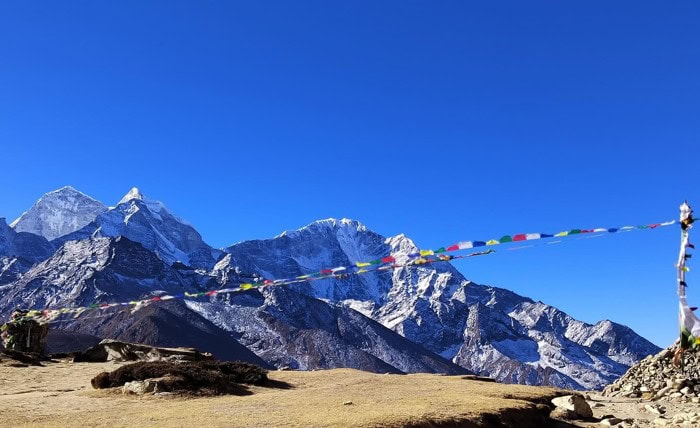
The Everest Base Camp trek is not technical — no ropes or ice axes required — but it is demanding. Trekkers need a good level of fitness, strong legs, and even stronger determination.
Training:
Three to four months of preparation helps immensely. Focus on cardio endurance (running, hiking, stair climbing) and strength (especially for legs and core). Simulate long days of walking with a backpack, ideally with elevation gain. Remember: it’s not a race. Consistency trumps intensity.
Gear:
Layering is key. Weather changes quickly — mornings can start below freezing and end in sunshine. A typical packing list includes:
- Down jacket and thermal base layers
- Windproof shell
- Trekking poles
- Sturdy, broken-in boots
- Sleeping bag rated to at least -15°C
- Water purification tablets or filter
- Sunscreen, lip balm, and sunglasses (the sun at altitude is brutal)
Most gear can be rented or purchased in Kathmandu or Namche, but quality varies. Invest in reliable footwear — your feet will carry your dreams.
Permits and Logistics:
Trekkers need two main permits:
- The Sagarmatha National Park Entry Permit
- The Khumbu Pasang Lhamu Rural Municipality Permit
Most organized treks handle these, but independent trekkers must obtain them en route (in Lukla or Monjo).
Altitude and Acclimatization: Respecting the Mountain
Altitude sickness is the invisible challenge of the EBC trek. Above 2,500 meters, the air thins, and oxygen levels drop dramatically. Even the fittest trekkers can suffer if they ascend too quickly.
The golden rule: “Trek high, sleep low.”
Allow at least two acclimatization days — typically in Namche and Dingboche. Symptoms like headaches, nausea, or insomnia should be treated seriously. Diamox (acetazolamide) can help, but hydration, slow pacing, and rest are your best defenses.
In the Khumbu, humility is survival. Those who ignore the altitude often find themselves turned back by their own bodies.
Seasons of the Himalaya
Timing is everything. The best trekking seasons are pre-monsoon (March–May) and post-monsoon (September–November).
- Springbrings blooming rhododendrons and clear skies. The trails buzz with energy, and Base Camp is filled with climbers preparing for summit attempts.
- Autumnoffers the crispest visibility, with crystal-clear mornings and fewer weather disruptions.
Winter (December–February) is stunning but bitterly cold, while the monsoon months (June–August) cloak the mountains in mist and leeches.
Each season paints the Khumbu in different hues — from the flower-filled trails of April to the frost-silvered mornings of October.
Costs and Comforts
A trek to Everest Base Camp typically takes 12–14 days and costs anywhere from $1,200 to $3,000 USD, depending on whether it’s guided or independent.
Accommodation:
Teahouses are the soul of the EBC trail — family-run lodges offering simple rooms, hearty meals, and mountain camaraderie. A typical room has twin beds, a shared toilet, and, if you’re lucky, a warm stove in the dining room. Hot showers and charging outlets often come at an extra fee.
Food:
Menus are surprisingly varied — from dal bhat (rice and lentils) to pasta and pancakes. Yet, the golden rule applies: eat local, eat fresh. Dal bhat power, as the saying goes, “24 hour no shower.”
Why Everest Base Camp Matters
What makes the Everest Base Camp trek so transformative isn’t just its physical challenge or the grandeur of the mountains — it’s the journey inward.
You start as a traveler; you end as a pilgrim. The trail strips away the noise of modern life. Up here, your world narrows to the essentials — breath, step, horizon. The mountains become mirrors, reflecting both your fragility and your strength.
Every trekker reaches a moment — perhaps at Base Camp, perhaps watching dawn from Kala Patthar — when they realize: the summit was never the goal. The journey itself was a gift.
Practical Tips from the Trail
- Go Slow:Altitude rewards patience. Let others rush — your lungs will thank you.
- Hydrate Relentlessly:Aim for 3–4 liters of water daily. Dehydration worsens altitude symptoms.
- Bring Cash:ATMs disappear after Namche, and card payments are unreliable.
- Respect the Culture:Walk clockwise around stupas, spin prayer wheels to your right, and never point your feet toward a shrine.
- Stay Flexible:Weather, health, or logistics may force changes. The mountain sets the pace.
- Disconnect to Connect:Internet access fades with altitude — and that’s a gift. Let the silence of the Himalaya be your companion.
The Return to the World
Back in Kathmandu, amid the chaotic hum of traffic and incense-filled temples, you might catch yourself longing for the rhythm of the trail — for the crunch of boots on rock, the laughter of porters, the sight of clouds wrapping around Ama Dablam.
The Everest Base Camp trek doesn’t end when you leave the mountains; it lingers. It reshapes your sense of distance, endurance, and wonder.
In a world obsessed with speed, the trek teaches slowness. In a culture of consumption, it teaches gratitude. And in the face of Everest, it reminds you that awe is not a luxury — it’s essential.
Final Reflection: The Mountain Within
Every step to Base Camp is a step inward — toward patience, humility, and presence. The trek’s physical destination is just a point on a map; its true summit lies in the quiet transformation that unfolds within.
As Sir Edmund Hillary, who first stood atop Everest, once said, “It is not the mountain we conquer, but ourselves.”
So when you finally turn your back on the Himalaya, remember: the trail never truly leaves you. Somewhere, deep inside, a part of you will always be walking toward Everest — steady, breath by breath, where earth touches the sky.