

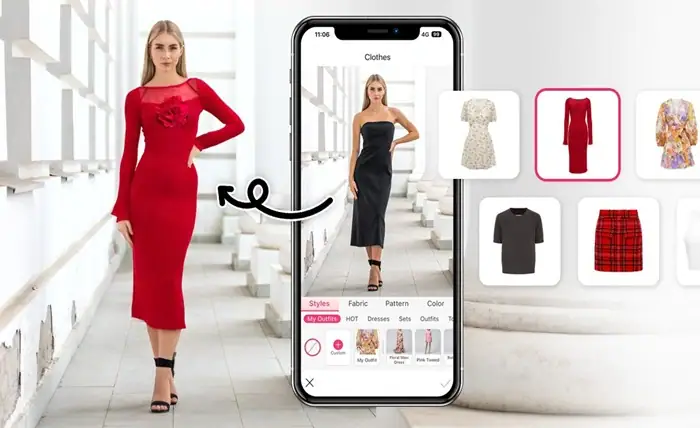
Online shopping has transformed how people buy clothing and accessories. But a big pain point remains: customers cannot try on items before purchasing. This leads to uncertainty about size, fit, appearance often resulting in returns, lost trust, and wasted resources. For sellers, returns are costly, margins shrink, and overall hassle increases.
What Are AI Fashion Trying‑On Tools?
AI fashion try-on tools are powered by computer vision and machine learning. They let customers upload a photo or use their device’s camera to preview clothes virtually. The AI analyzes body shape, posture, and proportions, then overlays chosen outfits in a realistic way. Some systems support multiple angles, color variations, and different sizes giving a more complete sense of what the clothes will look like to the customer.
How These Tools Benefit Sellers
Reducing Returns and Costs
Returns are a major problem for online clothes retailers. When customers receive items that don’t fit or look different from expectations, they send them back increasing shipping and handling costs. AI clothes changer tools help customers make better decisions, reducing return rates and saving sellers money.
Improving Conversion Rates and Sales
When buyers can “see themselves” in an outfit before purchasing, they are more likely to commit. Try-on tools remove hesitation, increase trust, and make the shopping process more engaging. That naturally boosts conversion rates and overall sales.
Expanding Market Reach
With virtual try-on, sellers can reach customers worldwide without worrying about physical store coverage or shipping limitations. Shoppers from remote areas or different countries can virtually fit items making global e-commerce more accessible.
Enhancing Customer Experience and Loyalty
A smooth and interactive shopping experience builds confidence. When customers receive what they expected — in look and fit — they’re more likely to return. Over time, this builds brand loyalty and positive reputation.
Challenges and Considerations for Sellers
Implementing AI try‑on tools is not without hurdles. Sellers must consider:
- Integration complexity: embedding AI tools into e‑commerce platforms may require technical effort.
- Accuracy limitations: virtual overlays may not capture fabric drape, texture, or realistic movement perfectly — potentially leading to mismatches.
- Customer skepticism: some customers may doubt virtual try-on accuracy and still prefer physical fitting or detailed size charts.
- Privacy concerns: uploading photos or using the webcam may raise privacy or data security concerns for users.
Sellers need to balance these factors when choosing whether — and how — to adopt AI try-on features.
Real‑World Use Cases Where AI Try-On Tools Shine
- Small and medium-sized online boutiques that cannot maintain physical stores but want to provide fitting confidence.
- Global marketplaces targeting customers in remote areas or regions with limited access to clothing retailers.
- Seasonal fashion retailers or “fast fashion” brands offering many styles — virtual try-on helps buyers explore multiple options quickly.
- Custom/fusion wear brands where fit matters significantly and virtual try-on can help reduce returns and size mismatches.
What the Future Looks Like: E‑Commerce with Intelligent Fashion
As AI and AR technologies advance, we can expect more immersive and reliable fashion try-on experiences:
- 3D/AR try-ons that allow customers to spin and view outfits in real time.
- Smart size‑recommendation engines that learn from past purchases and returns to suggest the best fit for each customer.
- Virtual wardrobes for users: storing outfits they like and mixing styles before buying.
- Seamless integration with social and shopping platforms — enabling “see‑and‑buy” experiences directly from social media or content apps.
For sellers, these developments offer powerful tools to reduce friction, improve satisfaction, and scale globally.
Final Thoughts
AI fashion try-on tools are more than a cool feature; they represent a major shift in how e-commerce can operate. For sellers willing to embrace the technology, these AI Image Generator offer clearer returns, reduced overhead, broader reach, and stronger customer relationships. As the tech improves and customers become more comfortable with virtual try-ons, we may soon see global fashion retail redefined.