

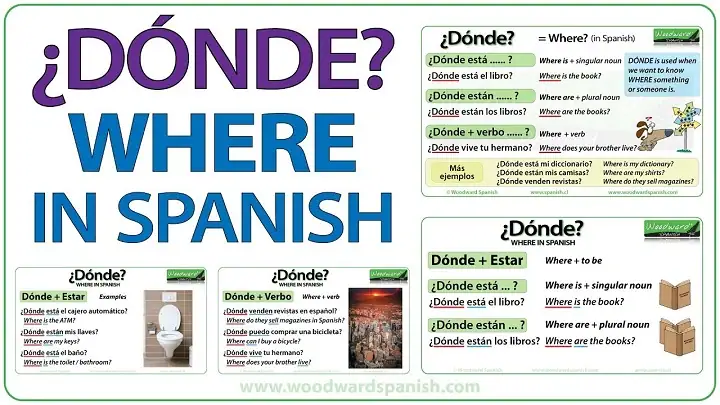
What Is Where in Spanish
Where in Spanish is dónde.
Dónde is one of the simplest words to master when you study Spanish.
You use it to ask someone or something about where they are. You have to use it in nearly every sentence.
Pronunciation
It sounds almost like DOHN-deh.
Breakdown:
• Don → dohn
• De → deh
The emphasis is on the “o”. It stresses the first syllable.
Dónde in Daily Life
Dónde can be applied to some everyday situations, i.e.:
• Asking directions to somebody while walking in the street.
• Finding a restaurant or a shop.
• Asking your friends where they work/live.
Examples:
• ¿Dónde come el lunes? (Where do you eat on Monday?)
Use Informal and Formal
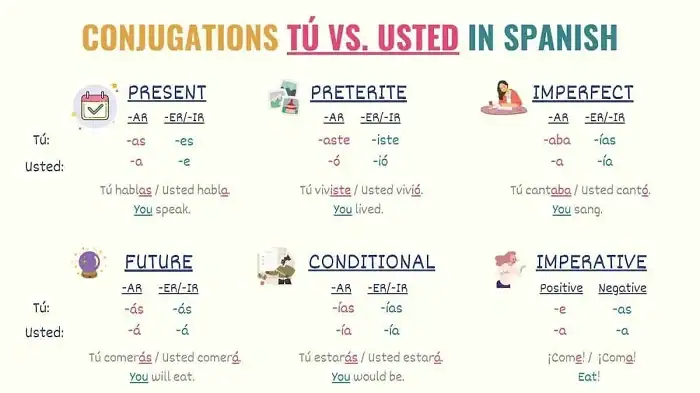
You can use both dónde informally and formally.
You can ask anyone. But remember to conjugate the verb depending on the informality level you are using.
Also Read: Good Morning in Spanish: Definition, Pronunciation, and Usage
Examples in Daily Life
- School: ¿Dónde está la clase de matemáticas? (Where is the math class?)
• New city: ¿Dónde queda el parque central? (Where is the central park?)
Cultural Note
Spoken Spanish uses very polite expressions when constructing dónde questions.
They will probably add por favor (please). As it is a politeness marker.
Examples:
• ¿Dónde está el banco, por favor? (Where is the bank, please?)
Being friendly and nice-guy-ness is a pleasant touch if you request directions in Spanish.
Mistakes to Avoid
- Don’t drop the accent mark at the top of the “o”. Otherwise, the word is different.
• Don’t confuse de dónde and a dónde. Both of them “from where” and “to where,” respectively.
Fun Facts
- We use it in all types of questions, from going somewhere to gossiping.
• It’s one of those question beginning words you’ll be forced to learn if you’re learning Spanish because it’s just so everywhere.
Dónde is a handy little Spanish word that you can say to ask somebody where something or somebody is.
It is casual or polite, easy to say, and formal.
The more you utter it, the more you’ll catch yourself involuntarily seeking it so that you may use it.
So, if you want to ask someone where something is or if you need to take someone somewhere he/she is, then you just need to: ¿Dónde estás? (Where are you?)