

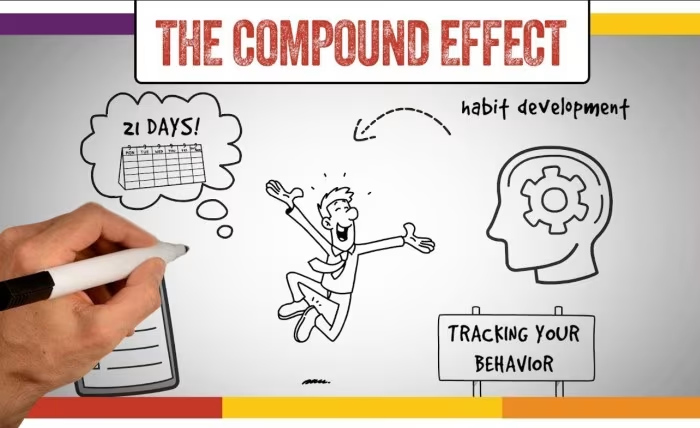
The Compounding Effect of Self Improvement
Small Changes Are Easy to Dismiss
Self improvement usually gets sold as a dramatic life makeover. New routine, new mindset, new body, new bank account, new identity. That sounds exciting, but it can also make growth feel exhausting before it even begins. When improvement is framed as a total reinvention, people often wait for the perfect mood, the perfect plan, or the perfect moment.
The real power of self improvement is much quieter. It comes from small choices repeated often enough that they stop feeling like choices and start becoming your normal way of living. A better morning routine, a calmer response, a short walk, a saved dollar, a finished task, or one honest conversation may not look impressive today. But repeated over time, these actions start to shape the direction of your life.
This is especially clear with money. One responsible decision rarely changes everything, but consistent choices can create stability, confidence, and options. Tools like personal finance debt relief can support people who are trying to turn financial improvement into a steady process instead of a panic driven reaction.
The Math Is Simple, But the Patience Is Hard
The familiar idea that improving by 1 percent each day can make you many times better over a year is not really about exact measurement. Most parts of life are too human and messy to calculate that perfectly. The deeper point is that small gains can multiply when they build on each other.
Reading ten pages today may teach you one useful idea. Reading ten pages most days for a year can change how you think. Walking for ten minutes today may not transform your health. Walking regularly can shift your energy, mood, and confidence. Writing one paragraph may not make you a writer. Writing often slowly changes your relationship with your own thoughts.
The problem is that compounding rewards are delayed. Early effort often feels invisible. You do the habit, and nothing dramatic happens. That is where most people lose faith. They mistake silence for failure, when really the foundation is still forming.
Negative Habits Compound Too
Compounding does not only work in your favor. Small negative habits also build momentum. Skipping one bill, avoiding one conversation, ignoring one health signal, or wasting one evening may seem harmless by itself. Sometimes it is. The danger comes when the exception becomes the pattern.
A few minutes of distraction can turn into a daily attention leak. A small impulse purchase can become a financial rhythm. A little resentment can become emotional distance. A missed workout can become a new identity: “I am just not someone who exercises.”
This is why self improvement is not only about adding good habits. It is also about noticing what is quietly repeating. Your life is always compounding in some direction. The question is whether your habits are carrying you toward the future you want or away from it.
Consistency Beats Intensity
Intensity feels powerful because it is visible. You can spend an entire weekend cleaning, planning, exercising, budgeting, or catching up. That can be useful, but intensity is hard to sustain. Most people cannot run their lives on emotional surges.
Consistency is less glamorous, but it is more dependable. The Centers for Disease Control and Prevention encourages people to start slowly and build physical activity over time, which reflects a broader truth about change. A habit you can repeat is more valuable than a perfect plan you abandon.
This applies beyond fitness. Five focused minutes every day can beat one frantic hour once a month. A small automatic transfer to savings can beat occasional guilt based budgeting. A daily check in with your priorities can beat a yearly life crisis. Improvement sticks when it becomes small enough to repeat.
Identity Changes Through Evidence
One overlooked part of self improvement is that habits do not just change your results. They change what you believe about yourself.
Every repeated action becomes evidence. When you keep promises to yourself, you begin to believe you are reliable. When you finish small tasks, you begin to believe you are capable. When you tell the truth sooner, you begin to believe you are brave. When you practice restraint, you begin to believe you are disciplined.
This matters because people often try to think their way into a new identity. They wait until they feel confident before acting confidently. But confidence usually follows evidence. You do not become someone new by announcing it. You become someone new by collecting proof.
Tiny Systems Protect Big Goals
Big goals need small systems. Without systems, goals depend too much on mood, memory, and motivation. A system is simply a repeatable structure that makes the right action easier.
If you want to read more, keep a book where you normally scroll. If you want to spend less, remove saved card information from shopping sites. If you want to communicate better, set a weekly time to handle difficult conversations instead of waiting until emotions explode. If you want to improve your health, choose a regular time and place for movement.
Harvard Health’s advice on building better health habits emphasizes the value of lasting habits and small daily steps. That is the practical heart of self improvement. You do not need a more dramatic personality. You need an environment that helps your better choices happen more often.
Compounding Requires Forgiveness
A major reason people fail at self improvement is not that they miss one day. It is that they turn one missed day into a full surrender. They skip the habit, feel guilty, decide they have ruined the streak, and then quit.
But compounding does not require perfection. It requires returning. Missing a day is not the same as losing your progress. It is just a moment that needs a next step.
The most successful people are not flawless. They are good at restarting quickly. They do not make every mistake into a personal identity crisis. They understand that the real habit is not only the action itself. The real habit is coming back after interruption.
The Quiet Future Is Being Built Now
The compounding effect of self improvement is easy to miss because it happens in ordinary moments. It happens when you choose the walk. It happens when you pause before reacting. It happens when you save a little, learn a little, clean a little, practice a little, or repair a little.
None of these moments may feel life changing by itself. But your future is being shaped by what you repeat. Every small action is a vote for a direction. Every habit is a message to your future self.
You do not need to become a completely different person overnight. You need to become slightly more intentional today than you were yesterday. Then do it again. Over time, those small improvements gather force. What starts as a tiny shift can become a completely different path.