

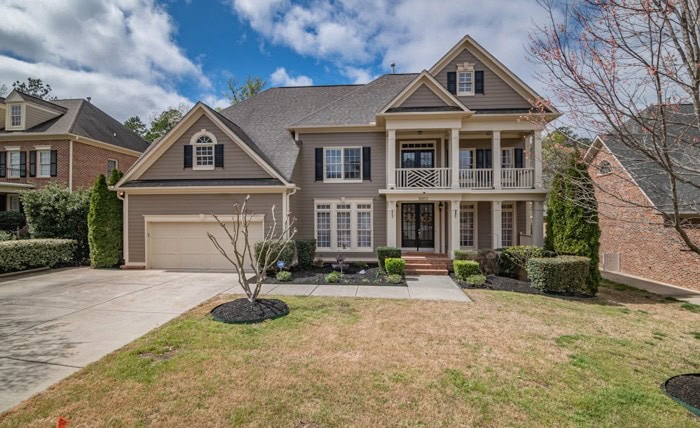
There is a familiar arc to the nomad life in Bali. You arrive for a season, extend, extend again, and somewhere around the one-year mark you stop calling it a trip. The cafés know your order. You have a scooter, a gym, a routine. And then a thought creeps in: you have been paying rent into someone else’s asset this whole time. What if that money built something of your own?
Converting remote income into a Bali asset is doable, but it is governed by rules that reward the prepared and punish the impulsive. This is the financial breakdown most “buy land in paradise” pitches skip.
Why Nomads Start Eyeing Land
The math is seductive. A year of rent on a decent one-bedroom can run well into five figures in dollar terms. Stretch that over several years and you have spent the equivalent of a meaningful down payment with nothing to show for it. Add Bali’s tourism demand, which can produce attractive rental yields on well-run villas, and the idea of owning rather than renting starts to look less like a fantasy and more like a spreadsheet worth building.
But yields quoted in glossy brochures are estimates, not promises. Occupancy varies, management takes a cut, regulations shift, and a villa is far less liquid than the index fund you could have bought instead. Treat any return figure you see as a hypothesis to stress-test, not a guarantee to bank on.
Leasehold: The Low-Commitment Default
For most nomads, leasehold (Hak Sewa) is the natural entry point. You sign a long-term lease, commonly around 25 to 30 years with possible extensions, and you get the right to use and build on the land without the heavier machinery of company ownership. It is cheaper to set up, faster, and easier to exit.
The trade-offs are real, though. A lease is a depreciating asset; every year that passes is one year less on the clock, and the value reflects that as the term winds down. You do not hold registered title in the way an owner does, so the quality of the contract is everything. And if you want to run the place as a commercial rental, leasehold alone does not automatically give you the licensing to do that legally, which brings us to the company route.
PT PMA: For Anyone Running a Rental Business
If your plan is income, not just lifestyle, you are likely heading toward a PT PMA, a foreign-owned Indonesian company that can hold a Right to Build (HGB) title and operate a rental business under the correct licensing.
Here is the number that changed the game. Through 2025, the minimum paid-up capital for a PT PMA sat at IDR 10 billion, a wall that priced out most individuals. Under BKPM Regulation 5/2025, effective October 2025, that minimum paid-up capital was cut to roughly IDR 2.5 billion (around USD 150,000). Worth understanding precisely: that IDR 2.5 billion is the cash paid into the company, while a separate total investment commitment of more than IDR 10 billion per business line still applies on paper, realized over time. For property and accommodation sectors, the value of land and buildings can count toward that larger investment figure, which softens the burden considerably. These figures move and the details are easy to misread, so confirm the current numbers with a notary or corporate lawyer before you plan around them.
So how do leasehold and a PT PMA compare for someone weighing lifestyle against income? You can dig into the practical differences between leasehold and freehold options in Bali to see how each path handles tenure, resale, and control. As a rough frame: leasehold suits a personal base or a low-key hold, while a PT PMA suits anyone serious about running a compliant rental operation and wanting registered title plus the ability to hold multiple properties.
Your Visa Is the Gatekeeper
This is the part nomads most often get wrong. Your immigration status quietly decides which doors are even open to you.
On a tourist visa, you are a visitor. You can browse and learn, but you cannot legally run a business, and you are not eligible for the residential title that requires residency.
A KITAS (limited stay permit) changes things. Hak Pakai, a registered residential Right to Use that can run up to 80 years in stages, generally requires a KITAS or KITAP. Keep in mind Hak Pakai is residential and tied to your residency, so it is a home structure, not a business one, and if your permit lapses, renewal can get complicated.
An Investor KITAS is the one that aligns with the PT PMA route, linking your stay to the company you have set up. If your endgame is a rental business, this is usually the visa conversation that goes with it.
The sequence matters: your visa shapes your structure, and your structure shapes your visa. Plan them together, not in isolation.
Compliance and Risk in 2026
Bali has spent the last couple of years tightening the screws on informal rentals, and 2026 is the year it bites. Two things belong on every nomad’s radar.
First, zoning. Confirm land use through the OSS system and the KKPR land-use conformity check before you commit. Remember land is measured in are here, where one are equals 100 square meters, and that green-zoned land generally cannot be built on at all. A surprising share of listings on the Bukit sit on land where zoning restricts villa construction, so this is not a formality.
Second, the rental-platform rules. By 31 March 2026, properties listed on platforms like Airbnb and Booking.com are expected to hold valid licensing, or risk being delisted, fined, or worse. Here is the catch that trips up foreigners specifically: the small-scale homestay license (Pondok Wisata) is restricted to Indonesian citizens. As a foreigner, you cannot hold it personally. The compliant path to operating a rental is a PT PMA with the correct accommodation licensing, or working with a properly licensed Indonesian management company. Getting this wrong is not a paperwork inconvenience; enforcement has included delisting and, in serious cases, demolition and deportation.
The Bottom Line
Turning Bali income into a Bali asset is genuinely achievable, but it is a project in structuring, not just a purchase. Decide first whether you want a lifestyle base or a business. Match the structure to that goal, then match your visa to the structure. Verify every figure with independent professionals, and treat projected returns as estimates to interrogate. Do that, and the leap from laptop to landowner becomes a calculated move rather than a leap of faith.