

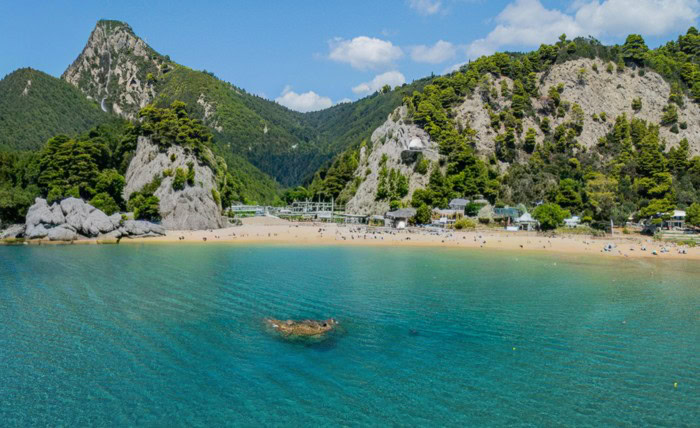
There’s a particular kind of disappointment that hits travelers across coastal Italy in the first week of August — you’ve spent something like four thousand euros to get there, the beach you’d been picturing is shoulder-to-shoulder with bodies, and the gelato shop you’d bookmarked has a thirty-five-minute queue out the door. That same beach, that same gelato shop, three weeks later in mid-September, runs roughly a third cheaper and actually looks like the photo from the booking page. The shift between peak summer and shoulder season in southern Europe is not subtle once you’ve felt it on consecutive trips.
For the majority of Mediterranean and Balkan destinations, September delivers nearly the same weather profile as August at roughly 30 to 40 percent lower prices, with the crowd density cut almost in half by mid-month. May tends to run as the second-best window — water temperature dips a couple of degrees compared with September, but everything is greener and the flight costs are usually even lower. Peak July and August hand you the harshest sun, the longest queues, and the highest hotel rates the entire calendar year produces, which is a poor exchange unless your school holiday calendar locks you into those weeks.
If you have actual flexibility on travel dates, picking shoulder season is one of the simpler ways to upgrade an entire trip without spending more money on it.
In this guide:
- What “shoulder season” actually means and why it exists
- The numbers behind the crowd-and-price difference
- Country-by-country picks across southern Europe
- What to pack for the shoulder months specifically
What “shoulder season” actually means
Shoulder season is the stretch of weeks sitting between high (peak) and low (off) season — for most of southern Europe that means late April through mid-June, plus September through mid-October. Sea temperatures stay swimmable across most of this window, daytime highs sit in the comfortable 22 to 28 °C bracket, and the vast majority of attractions remain fully operational while running without ninety-minute lines.
Local economies depend heavily on these shoulder months as well, which travelers don’t always pick up on. Many family-run trattorias and small guesthouses deliver visibly better service in September than in mid-August, mostly because the staff aren’t running at the breaking point of an entire summer’s tourist load.
The crowd and price math
Eurostat tourism data shows arrivals across Mediterranean countries peaking in July and August at roughly double the September numbers, then dropping off sharply once the school year resumes across northern Europe. You can pull the latest breakdown directly from the Eurostat tourism statistics page (https://ec.europa.eu/eurostat/web/tourism), which runs more current than any travel blog citing it second-hand. Hotel pricing tracks a near-identical curve.
A three-star hotel along the Amalfi Coast that’s listed at €280 a night in early August often comes back at €170 for the same room in mid-September — a 39 percent drop without any change in the actual product you’re getting. Flight prices typically collapse around mid-September once school holidays end across Britain, Germany, and France. The first two weeks of September consistently land as the sweet spot for most of southern Europe: you’re still inside summer weather but already on post-summer flight pricing.
Country-by-country shoulder season picks
Greece, Italy, and Croatia
September is the headline month for this group. Sea temperatures around the Greek islands stay above 24 °C reliably through to the first week of October, and the Croatian coast — Dubrovnik, the Dalmatian islands, the Istrian peninsula — is still warm without being overrun by the cruise ship calendar that dominates June and July.
Italy’s coastal stretches, particularly Cinque Terre, the Amalfi Coast, and Puglia’s Salento region, hit their genuinely most pleasant point of the year in September: the heat is hot but no longer punishing, and the food calendar lines up with grape and olive harvests.
Albania
Albania follows the same general pattern, but the swimmable window stretches a touch later than its Adriatic neighbors. Coastal towns like Ksamil and Himarë usually stay swimmable into mid-October across most years, and accommodation runs roughly half the August peak rate by late September, which is a sharper discount than you’ll find across the border in Greece or down in southern Italy.
For the specific weather windows by region — the Riviera coast, the inland mountain areas, Tirana’s continental microclimate — Tourist State’s breakdown of the best time to visit albania compares each month against what you’re actually trying to do (swim, hike, sightsee, save money) rather than handing you the standard “spring or autumn” non-answer most travel pages settle for.
Portugal and Spain
The Iberian Peninsula behaves a bit differently. September can still be genuinely hot inland — Seville, Madrid, and Córdoba routinely top 30 °C well into the month — but the weather is near-perfect along the Atlantic coast. Lisbon, Porto, and the green Portuguese north hit their best stretch in late September and through October. Spain’s northern coast, particularly San Sebastián and Bilbao, peaks in early September when the Basque festival calendar kicks in alongside the warm Atlantic light.
What to pack for the shoulder months
The trick with packing for shoulder season is layering, which sounds obvious but most people still under-pack jackets. Daytime temperatures can still hit 28 °C in early September across most of southern Europe, while the evening sea breeze can drop you into 16 °C territory by mid-October.
A light merino sweater earns its place in the bag every single time. Bring real walking shoes rather than flip-flops or low-grade sandals, because shoulder season is when you’ll actually want to walk old towns for hours without melting halfway up the cobblestones. Sunscreen still matters more than people assume — the Mediterranean UV index in September stays at 6 or 7, which still burns pale northern European skin in under an hour at midday.
FAQ
Is May or September better for southern Europe?
September tends to win on sea temperature (the water has spent all summer warming up and holds the heat through to October), tourism infrastructure (everything is still operating at full capacity), and food (peak harvest season for grapes, olives, and most vegetables). May wins on landscape (the countryside is genuinely green and flowering rather than sun-bleached), prices (often slightly lower than September across hotels), and indoor sightseeing (cooler indoor temperatures and smaller museum queues).
Will I miss summer events by traveling in shoulder season?
A few of them, yes — most of the major music festivals across southern Europe run in July and August. But September is when the wine harvest festivals, regional food celebrations, and most of the cultural and arts calendars open up across Italy, Greece, and the Balkans. The trade is generally favorable unless you’re specifically traveling for one of the big-name summer music events.
Is shoulder season weather actually reliable?
More reliable than May, in fact. Mediterranean September has historically the lowest rainfall percentages of any swimmable month across the eastern Mediterranean (Greece, Albania, Turkey), and the storm patterns that disrupt June or October tend to skip the September window almost entirely. The trade-off is that the days are getting shorter, so plan early starts if you want to maximize daylight hours.