

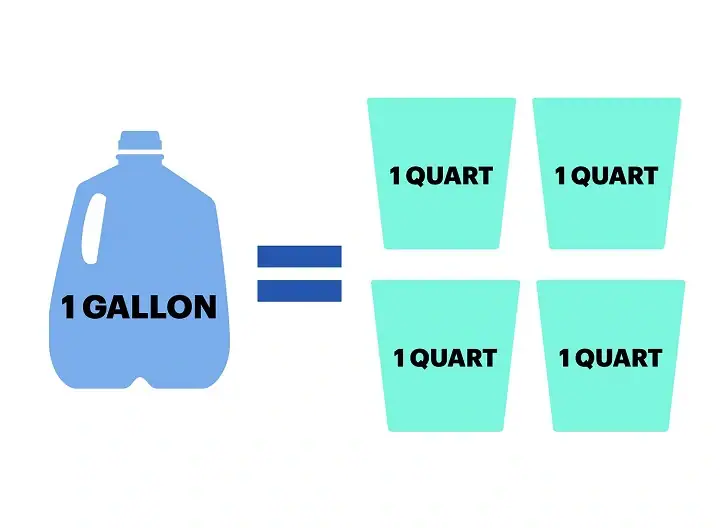
One gallon holds exactly four quarts. This fact helps when cooking or buying liquids. Think of it like building blocks stacking up evenly. Each quart fills one quarter of the full container. Measuring this way keeps things balanced and clear. Four parts make the whole without guesswork involved. It works the same every single time you check
Most folks think kitchen math won’t trip them up – until it does. Pouring goes fine, rhythm feels solid, then bam: the recipe wants a gallon but your tools hold quarts. A pause creeps in. It happens fast, even if you’re moving quickly. Timing squeezes, focus slips, confusion sneaks through.
Few things beat a method that just works – this one does. Clear knowledge means fewer pauses down the road. When quarts and gallons make sense, meals come together without hassle. Even routine chores feel smoother once the link clicks.
The Fundamental Conversion to Keep in Mind
A quart fits into a gallon exactly four times, every time. No matter if you are cooking or just measuring liquids, that amount does not shift. Four of those quarts fill one full gallon without exception. This match between the two stays fixed in all common situations.
Four quarts fit inside a single gallon. That much liquid fills up the whole container.
Liquids like water, milk, or juice fall under this rule – same goes for broth and oil. So long as the amounts follow U.S. standards, the math holds up just fine.
Understanding Quarts and Gallons
Filling containers at the store, you might not notice how quarts and gallons show up daily. Cooking needs them, true, yet so does wiping floors or checking fluids in a car. Without knowing how they relate, errors creep in before you think twice.
Knowing this measurement helps you:
- Keep flavors balanced in recipes
- Filled with certainty when sizing big groups. Confidence grows while handling hefty amounts
- Cut down on clutter by skipping trial and error. Mistakes fade when planning takes over
Too much liquid causes issues. A tiny bit less works better. Fill just under the line. Overfilling leads to leaks. Leave space at the top. Just enough keeps it balanced. Not empty, never full
Little gains grow larger when they stack slowly.
Quart vs Gallon What Sets Them Apart
What fills a big bottle often needs more than just one measure. Sometimes you grab four of the smaller ones to match the bigger container. That little one goes by another name – quart – and handles most kitchen tasks without trouble. The large version, called a gallon, shows up when there’s plenty to pour or cook for many people. Matching them feels natural since they come from the same set of rules for measuring liquid.
A single gallon holds exactly four quarts, always. This steady mix stays reliable, helping folks measure without confusion now and then. The count never shifts, so using it feels natural every time around.
An Easy Way to Remember the Conversion
A single image can make things clearer if your mind is crowded. Imagine a big jug split into four parts, all the same size. One part stands for a quart. Fill every piece completely – now it’s a whole gallon.
A picture inside your head fits right into cooking tasks, making it stick around easily. What sticks usually doesn’t need reminding.
Everyday Cooking Moments That Bring This Up
Funny how common this shift becomes when you’re actually looking. Pops up in meals around the house way more than anyone really guesses.
A single gallon of stock fits neatly into four quart jars, so that’s how many you grab. When the plan shifts to just half the batch, trust kicks in – two quarts do the job, no doubt needed.
Clear thinking keeps outcomes steady.
Quick Conversion Table for Easy Reference
A single gallon holds four quarts. Half of a gallon means you have two quarts. One quart comes from a quarter gallon. When there are two full gallons, that adds up to eight quarts
Finding the pattern first makes recalling the chart feel natural by comparison.
Conversion Varies by Liquid Type?
One quart stays one quart, no matter the fluid inside. Water, milk, oil – each fits the same rule. A full gallon needs exactly four of them, every time. Size doesn’t shift when contents change.
Folks often think heavier means more, but that’s not how it works here. Still, when you’re checking amounts, the math doesn’t change at all.
Quarts and Gallons Beyond the Kitchen
Paint comes in quarts and gallons, just like soup does. When you clean floors, the bottle might tell you to mix a quart of solution per gallon of water. Car engines need oil checks – those measurements often show up in quarts. Getting how they relate means less guesswork at the store. Buy too many? That leaves extra cans sitting around. Not enough? You’ll make another trip later.
This idea slips into your mind without effort, once it clicks. How easily habits form surprises most people.
U.S. Measurements vs Metric Systems
One gallon here equals about four liters there. Recipes from abroad might list fluid amounts in a way that feels odd at first. Quarts show up often in American kitchens. Elsewhere, people reach for liter markings on their jugs. Switching between systems takes attention. What looks familiar to one cook may look strange to another.
A quart here, another there – U.S. cooking often sticks to the four-quart pattern without saying much. Starting off with liters? That detail tends to show up right at the top, spelled out plain.
Also Read: Neil Patrick Harris Amy Winehouse Platter: Why This Search Exists but Nothing Real Does
When Guessing Leads to Issues
Mistakes happen when you guess how much liquid to add. Flavor fades if there is too much. Texture suffers just as fast. Not enough leaves things clumpy or strange. Precision matters more than most think.
Predictable outcomes start with precise measurements. Fixing mistakes takes longer when details get missed early on.
Teaching This Conversion to Beginners
A single gallon holds exactly what four quarts can carry. Kids grasp this fast when they see it poured step by step. One skill that grows here is measuring things with care. Math becomes real when hands are part of the learning.
Starting young with simple skills grows sureness over time.
Tools That Measure Well
Start off by picking a jug that has clear markings – this helps get amounts right. When labels show quarts alongside gallons, there is less guessing during setup. Skip whatever cup or bowl you find lying around; they might not hold what you think.
Good tools support better results.
Frequently Asked Questions
How many quarts are in one gallon?
There are 4 quarts in 1 gallon in the standard U.S. measurement system.
Is this conversion the same for all liquids?
Yes, the conversion stays the same whether you are measuring water, milk, oil, or broth.
Can I use quart containers to measure a gallon?
Yes, filling four quart containers gives you exactly one gallon.
Are quarts and gallons used outside the kitchen?
Yes, they are also used for paint, cleaning solutions, and vehicle fluids.
Is a U.S. gallon the same as a metric gallon?
No, some countries use different systems. U.S. recipes follow the four-quart gallon.
What if getting measurements right felt easier than expected? Confusion trips folks up far more than ability ever does. Think about it – knowing just one fact can shift everything: a gallon holds exactly four quarts. Liquids start making sense after that, flowing into place without second guesses.
Fewer mistakes happen when you follow this one tip. Cooking feels easier each time you try it. Confidence grows without needing extra effort.