

Think of something fresh and sour. Got it? I bet it’s a lemon! We use them in tea. In juice. In food. They’re everywhere, right?
If you’re learning Spanish, you need this word. It’s super useful. Not just for cooking. For talking too!
You’ll see lemons at markets. In cafes. Even in Spanish class. Good news? The Spanish word is easy. Like, really easy to remember.
What Lemon Means in Spanish
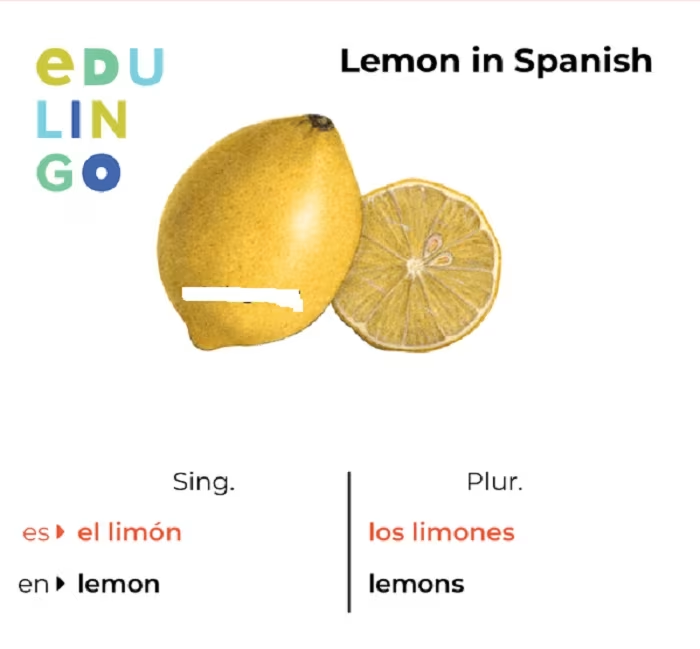
Ready? It is limón in Spanish. Say it like “lee-MON.” See that mark on the o? It makes the sound longer.
More than one lemon? That’s limones. Easy!
Look:
• Quiero un limón. (I want a lemon.)
A Quick Note About Limón and Lima
This gets a bit tricky. Limón means lemon in most places. Lima means lime. Simple, right?
But wait! In Mexico? Limón means lime. And lima means lemon sometimes.
Don’t stress. Just ask! Or look at the color. Green or yellow? You’ll figure it out.
Check these out:
• En España, el limón es amarillo. (In Spain, lemons are yellow.)
• En México, el limón puede ser verde. (In Mexico, “lemons” can be green.)
Describing Lemons in Spanish
Want to describe lemons? Use these words:
- Amarillo – yellow
• Agrio – sour
• Pequeño – small
• Grande – big
• Fresco – fresh
Try these:
• El limón es amarillo. (The lemon is yellow.)
• Este limón está agrio. (This lemon is sour.)
These words work for all fruits.
Fun Fact About Limón
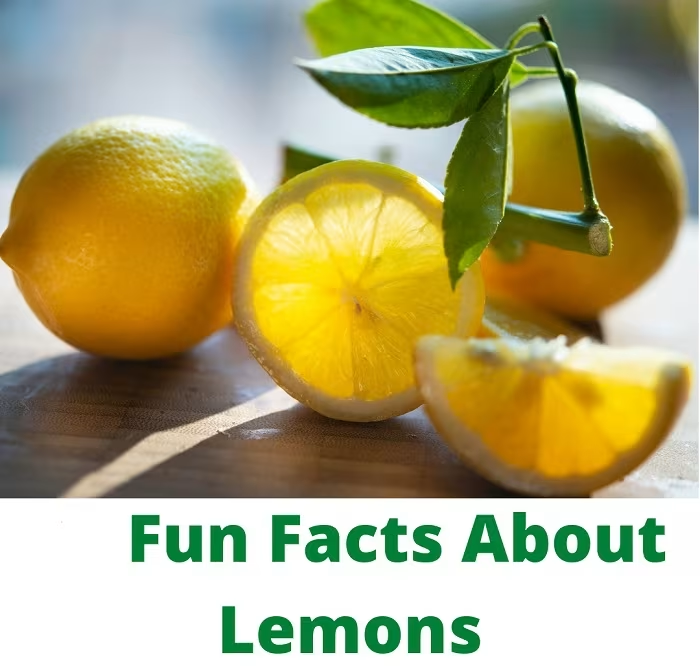
The word limón comes from Arabic. It’s laymūn. That was ages ago!
Spain had lots of Arabic words. Food words mostly. Now lemons are everywhere. In cooking. In cleaning. Even in home cures!
Extra Words Related to Limón
Want more lemon words? Here:
- Limonero – lemon tree
• Limonada – lemonade
Last Words
So there you have it! Limón is easy. It’s useful. You’ll use it all the time! It’s everywhere! Now practice! Keep using it. Every day. Soon? You’ll talk about food like a pro. All in Spanish! How cool is that?