

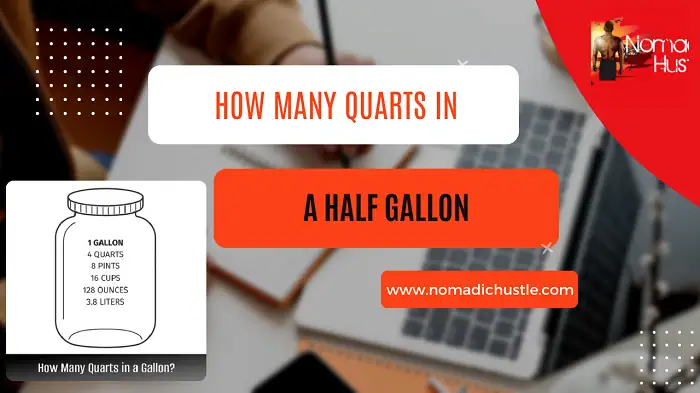
One quarter here, another there – it adds up quicker than most expect. Picture a kitchen where measuring goes sideways, just one mistake turning dinner into guesswork. That same error shows itself on walls, when paint meant to cover ends up short by inches or feet. Walk through any home improvement shop and faces light up – or drop – based on how well they grasped what the label really said. Half a gallon? Two quarts fit inside it, clean and exact. Yet people keep tripping over this, even though simpler systems exist, ones easier to learn, faster to use.
Understanding Quarts and Gallons
One fourth of a gallon is what makes up a quart, so doubling that gives you a half. Most nations measure liquids using metric units, yet the United States sticks with its older method every day. Instead of tens, these measurements grow through steps like splitting holes into halves, then again into quarters – an idea rooted in ancient English habits. Liters shift smoothly, multiplying or dividing neatly by ten each time, but American amounts build differently. From gallons down to quarts, then pints, cups follow, and finally fluid ounces – all linked stepwise. Mistakes creep in easily when shifting between them without careful math. A single U.S. gallon contains 128 fluid ounces. Divide it by two, you get 64 – that is what fills a half gallon container. One quart equals thirty-two ounces, which means the half gallon houses exactly two of them. Yet during real-world use, folks skip math and go by feel instead. Guessing replaces measuring, errors creep in without warning.
Liquid Quarts vs Dry Quarts
Here’s something often missed – how quarts split into two kinds. Not every quart is the same, even though the name stays unchanged. Fluids ride on the liquid version of the measure. For goods like corn or fruit, people once counted with dry quarts. The gap between them? Small, yet real. Roughly speaking, one dry quart stretches to just over 1.1 liquid quarts. Even today’s stores treat a quart as liquid stuff by default. Only in certain farm-related situations will you run into the dry kind. Old cookbooks sometimes just say “quart,” leaving it unclear which one they mean. Charts showing conversions won’t fix that mix-up – knowing the background does.
Why Containers Can Be Misleading
Here’s a wrinkle – containers sometimes fall short of their labels. A jug stamped half-gallon could come in slightly below 64 ounces because space is left at the top or rules allow it. The same goes for certain four-quart bins that actually run closer to 3.9 quarts. Soup won’t fail from that gap, though stirring up multiple rounds might show small differences piling up. Federal rules set how full a container must be – factories check against those, not perfect numbers. Tools that slip just a bit can still miss the mark, even when calculations look right on paper.
Cups, Quarts, and Everyday Confusion
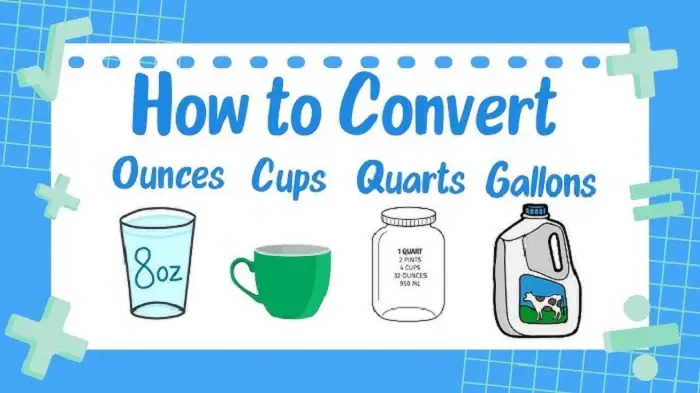
Ah, cookbooks usually act like everyone just gets how measurements connect. Still, plenty of grown-ups stall when asked what six cups turn into in quarts. Here’s a trick – because each cup holds eight fluid ounces, it clicks that four cups fill one quart. So double that thought: two quarts sit tight as eight cups, which? Exactly half a gallon. Trouble is, stress wipes out even simple links. Most folks never stop to calculate while waiting for bread to rise. What counts isn’t formulas – it’s routine. A steady hand beats a sharp mind here.
How We Learn (and Forget) Measurements
Back in third grade, kids often start learning how units convert. A drawing of a “gallon man” shows quarts as arms and legs, making the idea click fast. Memory holds onto images like that one pretty well at first. Yet without regular use, even clear ideas tend to slip away slowly. When recipes go wrong or paint cans misjudged, grown-ups wind up figuring it out again. Most never make it part of daily life, though. Something’s missing when school math fails in real life. Practice sticks because it matters, never from rote exercises.
Metric vs U.S. Measurements
Oddly enough, trade runs into hiccups because old-fashioned measurements stick around. Overseas goods show sizes using milliliters or liters instead. For some folks in the U.S., that causes confusion. Take a 2-liter soda container – it holds close to 2.11 quarts of liquid, which spreads out to nearly 8.45 cups. These numbers clash with common kitchen tools. So guesses take over when pouring. Little differences grow larger when given enough time. Switching entirely to metric isn’t blocked by any rule; Congress gave approval back in 1975. Still, nothing much changed after that. What people were used to mattered more than what was officially suggested.
Milliliters show up on every prescription pad, even where miles still rule the roads. Liters guide the hand of anyone mixing chemicals under fluorescent lights. Quarts linger near wrenches, tied to old engine blueprints yellowed by time. Some words stick around well past their usefulness. Metric wins quietly, one decimal at a time.
Why Familiar Terms Matter
Familiar words sit heavy in the mind. Picture a half gallon – most see a red plastic milk container or a bucket of primer. Swap it for 1.89 liters and that picture fades. Meaning sticks not just to numbers but to how we name them. What something is called colors understanding more than precision ever could. Even clear-cut changes stumble when they ignore shared mental pictures. Old names hold stories new ones rarely match.
Practical Measurement Habits
Here is how it works. Working with ingredients or mixtures means paying close attention. One wrong step changes everything. Follow each part slowly. Watch measurements like you’re tracking time. Mistakes add up fast. Skip nothing. Stay sharp from start to finish
- Assume standard U.S. liquid measures unless noted.
- Here is a fact to keep in mind: one gallon holds four quarts.
- So half of that amount equals two quarts.
- Think of it this way – when you split a gallon in two, each part gives you two quarts.
- That connection stays true every time.
- Four makes one, so two make half.
- Numbers like these fit together without gaps.
- Every quart counts, just as the total must match.
- Sometimes a jug looks full but isn’t – read the numbers instead of guessing by size.
- What matters is what the lines say, not how it appears at first glance.
- When handling vital tasks such as mixing medicine, always check measurements with precision instruments.
- A bit more than a quart fits into one liter.
- Think of it like that when switching measures.
- Roughly speaking, the number jumps just above what you start with.
- Close enough for everyday guesses.
- Not exact, yet handy in practice.
- About six percent shows the difference between them.
- Once filled, mark old containers plainly – strength fades with age.
- Start by showing kids how pouring water works.
- Jars with lines help them see changes.
- One pours slowly while another watches closely.
- After a bit, they switch roles without being told.
- Water moves from tall containers to wide ones.
- This way teaches measuring better than words alone.
- Each try builds confidence quietly.
Also Read: How Many Quarts in a Gallon? A Simple, Clear Explanation
Quick Conversion Table
| Measurement | Equivalent |
| 1 gallon | 4 quarts |
| Half gallon | 2 quarts |
| 1 quart | 4 cups |
| Half gallon | 8 cups |
| 1 quart | 32 fluid ounces |
Slowly comes accuracy. Not so much about rules known, but how they’re used when life moves fast. Two – the digit – is simple enough. Tougher part? Letting go of guesses shaped by appearance, patterns, or shaky recall. Measuring lives in skin and eyes, not just thought. Routine gives it shape.
Half a gallon holds two quarts. Small detail, true. Yet that truth leans on structures much larger than numbers alone.
Frequently Asked Questions
How many quarts are in a half gallon?
A half gallon contains exactly two quarts.
Is a quart always the same size?
No, liquid quarts and dry quarts differ slightly.
Why do containers sometimes hold less than labeled?
Manufacturing rules allow small headspace differences.
How many cups equal a half gallon?
A half gallon equals eight cups.
Why does the U.S. still use quarts instead of liters?
Habit and familiarity kept older measurements in place.