

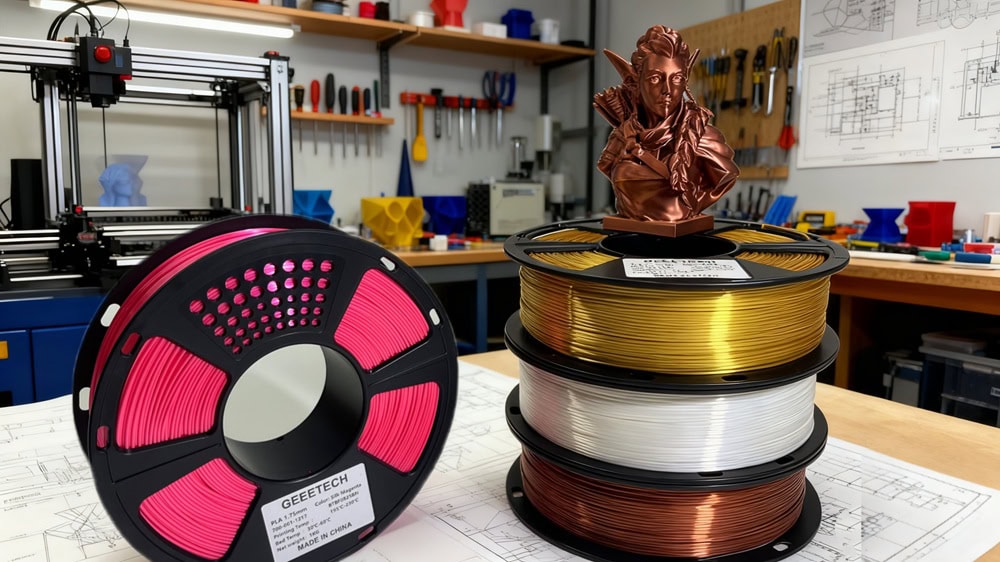
There was a time when 3D printing was in movies only. Like, only big labs had them. Well, guess what? Now they’re sitting on tables everywhere. You can buy one and don’t forget the essential 3D printing material — 3D printer filament. Start making stuff!
This is wild, right? Regular people print things at home now. Kids make toys. Adults fix broken parts. Students build school projects. All with plastic filament that melts and builds things layer by layer.
3D Printing for Consumers Growth
How did we get here, then? Printers got cheap and functional. Brands like Geeetech. Now anyone can buy one online.
These printers work simply. They use a technology called FDM. (That’s just melting plastic and stacking it.) The plastic thread heats up, and melts. Then build your thing layer by layer. Pretty neat!
You can make phone stands, toy helmets, or even little gears that work! The best part? You don’t need a factory. Just your desk.
People share designs online. They do it to help each other out. It’s not just watching robots anymore. You’re the one making stuff!
Why Plastic Filaments Rule the Consumer Market
OK, so the plastic thread? In the field of 3D printing, it is called 3D printer filament. That’s your printer’s “ink.” It comes in tons of colors. Different strengths too. Some are bendy. Some are hard.
Why plastic? It’s cheap, and easy to use. It also works great. PLA is the star here. See the 3d filament types.
PLA (Polylactic Acid)
PLA filament is the best to start with. It’s made from corn! So it breaks down in nature. Melts at low heat. Like 180 to 200°C. Won’t warp much. Safe to use inside.
Your prints come out smooth. Colors pop! Great for models, school stuff, or fun projects. But here’s the thing, it hates heat. Leave it in a hot car? It might get soft. Still, for most stuff at home? Perfect!
ABS (Acrylonitrile… wait, big word alert!)
ABS is tough plastic. LEGO uses it! Strong stuff. Handles heat better than PLA.
But it’s tricky. Needs hot temps (220 to 250°C). Makes smells. You need good air flow. Also warps are easy. But for outdoor stuff? Or parts that need hard? ABS rocks.
PETG (Another big word, just think “strong clear plastic”)
PETG is like the middle child. Not too soft. Not too hard. Just right! It’s strong, and bendy. It doesn’t mind water. Looks shiny too.
No bad smells. Doesn’t break easily. Many people love it. It does lots of jobs well.
Beyond the Basics: Specialty Filaments
Ready for fun stuff? Check these out.
TPU: Rubber-like plastic. Make phone cases! Seals! Squishy things!
Wood PLA: Has real wood bits in it. It looks like wood. Feels like wood!
Carbon Fiber PLA: Super strong. Super light. Like race car stuff!
Silk PLA: Shiny! Makes pretty things look even prettier.
Each one needs different settings. You’ll play with temps, and speed. But that’s the fun part!
The Science Behind Great Prints
Good prints need more than just plastic. Let me explain.
Temperature: Too cold? Layers don’t stick. Too hot? Messy blob. Got to be just right.
Bed Sticking: Use glue sticks or tape. Heated beds help too. Stops things from sliding around.
Cooling: PLA likes cold air. ABS? Not so much. It might crack.
Oh, and water! Plastic soaks it up, makes bad prints. Keep your filament dry, use sealed bags, or a dry box.
Why Consumer 3D Printing Matters
This changes everything! Schools teach with it. Kids learn by doing. At home? Fix that broken knob. Make custom tools. Design your own stuff!
Small shops love it too. Artists sell unique jewelry. Engineers test ideas fast. No factory needed. Just you and your printer.
Choosing the Right Filament for You
New to this? Start with PLA. It’s cheap, clean, and works great on the first try.
Need strong parts? Try PETG. For really tough jobs ABS or carbon PLA. If you want to play around, get TPU or silk PLA. There are so many choices!
Start small. Print tiny things first. Learn your printer. Then go bigger!
Final Thoughts
Home 3D printing turns you into a maker. PLA and other plastics make it happen. You can do it all: arts, parts or learning.
Load up that filament. Level your bed, and hit print. With some time and ideas? You’re not just printing plastic. You’re printing dreams. How cool is that?