

What Is “Yes” in Spanish
Yes in Spanish is a stressed definition of sí.
One of the simplest and most convenient words that you’ll ever need to learn to use in Spanish is the word yes, i.e., assent, acceptance, or agreement. Unaccented si means “if.” So a small accent does matter. So remember that: sí is yes, and si is if.
Pronunciation of Sí
It is pronounced like see.
The word is short, and light.
Breakdown:
“Sun.” like “S”.
“ee” is like “see”.
Slowly say it: see.
Sí vs. Si
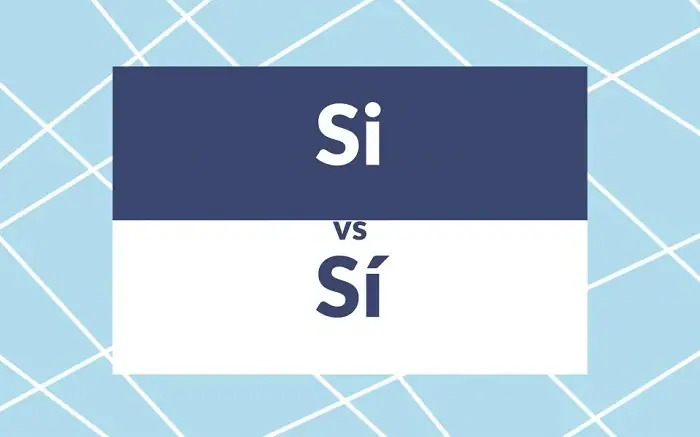
Proper accent does matter.
Sí (accented): yes.
Examples
Sí, quiero ir. (Yes, I want to go.)
Don’t forget to include this teeny weeny accent in your yes, because literally, it can have the ability of totally reversing your entire sentence around.
Spanish: “Yes”
There are a gazillion ways to say yes in Spanish, from mood to tone to situation.
Sí – The plain yes.
¿Te gusta el chocolate? Sí.
(Do you like chocolate? Yes.)
Por supuesto Certainly.
¿Te llamo luego? Por supuesto.
(Do I call you later? Certainly.)
Vale – Spanish equivalent of okay or yes.
¿Nos vemos más tarde? Vale.
(See you later? Okay.)
Cómo no – Abbreviation of course or why not.
¿Te gustaría un té? Cómo no.
(Would you like tea? Of course.)
How to Use Sí in Everyday Conversations
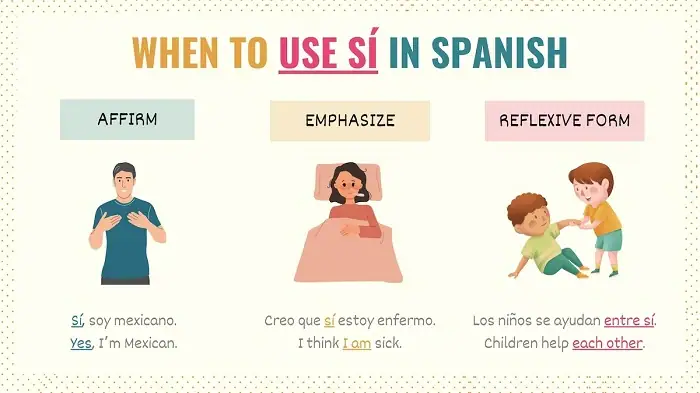
You will be using the word sí wherever you go, from greeting a person when you open the door and in the marketplace, to even on the telephone.
Examples:
Sí, hola.
(Yes, hello.)
In excitement:
¡Sí! Won the game. (Yes! Won the game.)
Also Read: No in Spanish: Grammar, Pronunciation, and Frequent Use
Cultural Note
Yes tends to be followed by bodily gestures in Spain.
One smiles or nods when one says sí.
Exaggeratory sí sometimes indicates elation or tension of assenting:
¡Sí, sí!
The correct answer in is actually “vale” rather than “sí.”
It is courteous in Mexico to say “claro que sí”. It means naturally, yes.
Being polite, in Argentina and Chile, they use “sí, obvio”. It means of course, yes.
Mistakes
Forced rejection of the accent: “si” and “sí” are not synonyms.
One would use a “vale” or an “of acuerdo,” adding an extra “sí.”
Saying a “sí” too quickly in formal CVs without a “por favor” or a “gracias.”
Fun Facts
The Latin origin is Latin “sic,” “thus” or “so.”
It’s maybe the most overlooked word of all in the whole world of Spanish-speaking countries.
It’s the B of the Spanish musical chord, too.
Sí is a sexy but boring word. You can show agreement, passion, or deference. It depends on your accent.
Forget the accent, be friendly in tone, and rehearse with regular sentences.
The next time they or she come by to drop in and greet you, “¿Hablas español?” You might say: ¡Sí, hablo español!