

Hang out with Spanish speakers? You know they talk with lots of feelings. They mix jokes and anger in one breath. That’s why bad words pop up more often. Some are funny. Some are soft. Some hit hard. Watch Spanish shows? Listen to songs? Chat with friends from Spain? You’ll hear these words. A lot.
This guide shows you common bad words. What they mean. How people use them. Not to teach you to be mean. But to help you get real talk. To avoid big oops moments. And to know which words hit how hard.
Why These Words Matter
Spanish lives in many places. Spain. Mexico. Argentina. Colombia. Chile. Peru. More too. Each place uses bad words differently. A soft word here? Super rude there. Like, a funny word in Spain might hurt feelings in Mexico.
Know the meaning? Know how strong? You stay safe. No trouble. Plus movies make more sense. Songs too. You feel what they feel.
Light Bad Words (OK With Friends)

These are rude but not too bad. Friends use them as jokes. But hey, not with strangers. Not with old folks.
Mierda
Means: crap
When: Things go wrong.
Like: Mierda, I forgot my phone.
How strong: Medium.
Carajo
Means: damn or hell
When: You’re mad or shocked.
Like: What the carajo are you doing.
How strong: Medium.
Maldita sea
Means: damn it
When: You’re upset. Mad.
Like: Maldita sea, it won’t work.
How strong: Medium.
Joder (Spain mostly)
Means: damn, screw it
When: Mad or surprised.
Like: Joder, it’s cold.
How strong: Medium.
Hostia (Spain)
Means: holy bread (weird, right?)
When: Shocked. Annoyed.
Like: Hostia, what happened.
How strong: Medium but Spain says it lots.
Funny Bad Words
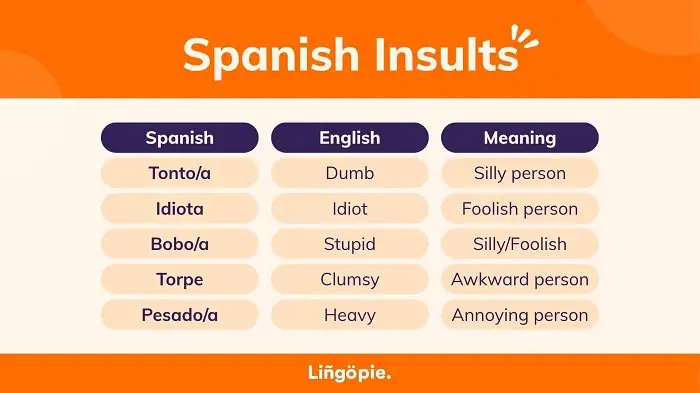
Tonto
Means: fool or dumb
When: Light teasing.
Like: Don’t be tonto.
How strong: Soft.
Idiota
Means: idiot
When: Someone acts silly.
Like: That guy’s an idiota.
How strong: Soft to medium.
Burro
Means: donkey (for dumb people)
When: Joking with pals.
Like: You’re such a burro.
How strong: Soft.
Bobo
Means: silly
When: Friend teasing.
Like: You’re a bobo.
How strong: Super soft.
Estúpido
Means: stupid
When: You’re annoyed.
Like: Don’t be estúpido.
How strong: Soft to medium.
Strong Bad Words
These hit harder. People say them when super mad. Don’t use them unless you know the culture.
Puta
Means: prostitute
When: Heavy insult
How strong: Strong.
Hijo de puta
Means: son of a b-word
When: Super rude insult
How strong: Very strong. Don’t use it.
Puto
Means: male prostitute
When: Attack on someone
How strong: Very strong.
Coño (Spain and Caribbean)
Means: female part
When: Really angry
How strong: Strong.
Chinga tu madre (México)
Means: insult to mom
How strong: Super duper strong. Never say this.
You hear these in movie fights. Big drama scenes. They sound mean. Not for normal talk.
Words From Different Places
Each Spanish country has its own style. Here’s what you hear where.
Mexico
Güey: dude or idiot. Depends how you say it. Soft.
Cabrón: tough guy or jerk. Medium to strong.
Chingado: messed up. Strong.
Also Read: How Much Does a Colonic Cost in 2025? A Complete, Real-World Guide to Colon Hydrotherapy Pricing
Argentina
Boludo: idiot but often nice. Soft to medium.
Pelotudo: meaner version. Strong.
Pendejo: annoying person. Medium.
Spain
Gilipollas: jerk or idiot. Strong but people say it lots.
Hostia puta: super strong surprise.
Cojones: balls. Shows anger. Medium to strong.
Colombia
Gonorrea: super mean insult. Strong.
Huevón: lazy or idiot. Medium. Depends on tone.
How Spanish Speakers Use Bad Words
Tone changes everything. Same word? Can be funny or mean. Like, friends in Argentina call each other “boludo” while laughing. But yell it angry? Real insult.
They also mix bad words. Makes feelings stronger:
- What the carajo is happening
- Joder what a bad day
- This guy is a hijo de puta
The feeling behind it? That counts.
Also Read: Shingles in Spanish: Meaning, and Symptoms
How to Stay Safe
Not sure how strong a word is? Don’t use it. Learn by listening. Watch Spanish YouTube. TV shows. Movies. See how people react to bad words.
Safe tips:
- No bad words with strangers.
- No bad words with old people.
- No bad words at work.
- No bad words at school.
- Only soft words with close friends.
If you use the wrong word. Then you may sound mean. Even if you’re not.
Also Read: Kale in Spanish: Easy Guide for New Learners
Why Learn Them?
You don’t have to use them. But knowing helps:
- You get jokes better.
- You understand street Spanish.
- Movies make sense.
- You don’t offend people.
- You know if someone’s being mean.
Real language has strong words. Want to get Spanish culture? You need to know these.
Spanish bad words are colorful. Full of feels. They show you how people really feel. This list? It’s your safe intro. Use it to recognize words. Not to hurt people.
Listen more than talk. Watch the tone. Every word changes. Mood matters. Place matters. Country matters.